
 Toolkit
Physical Spaces
Physical Spaces
in make-a-thek
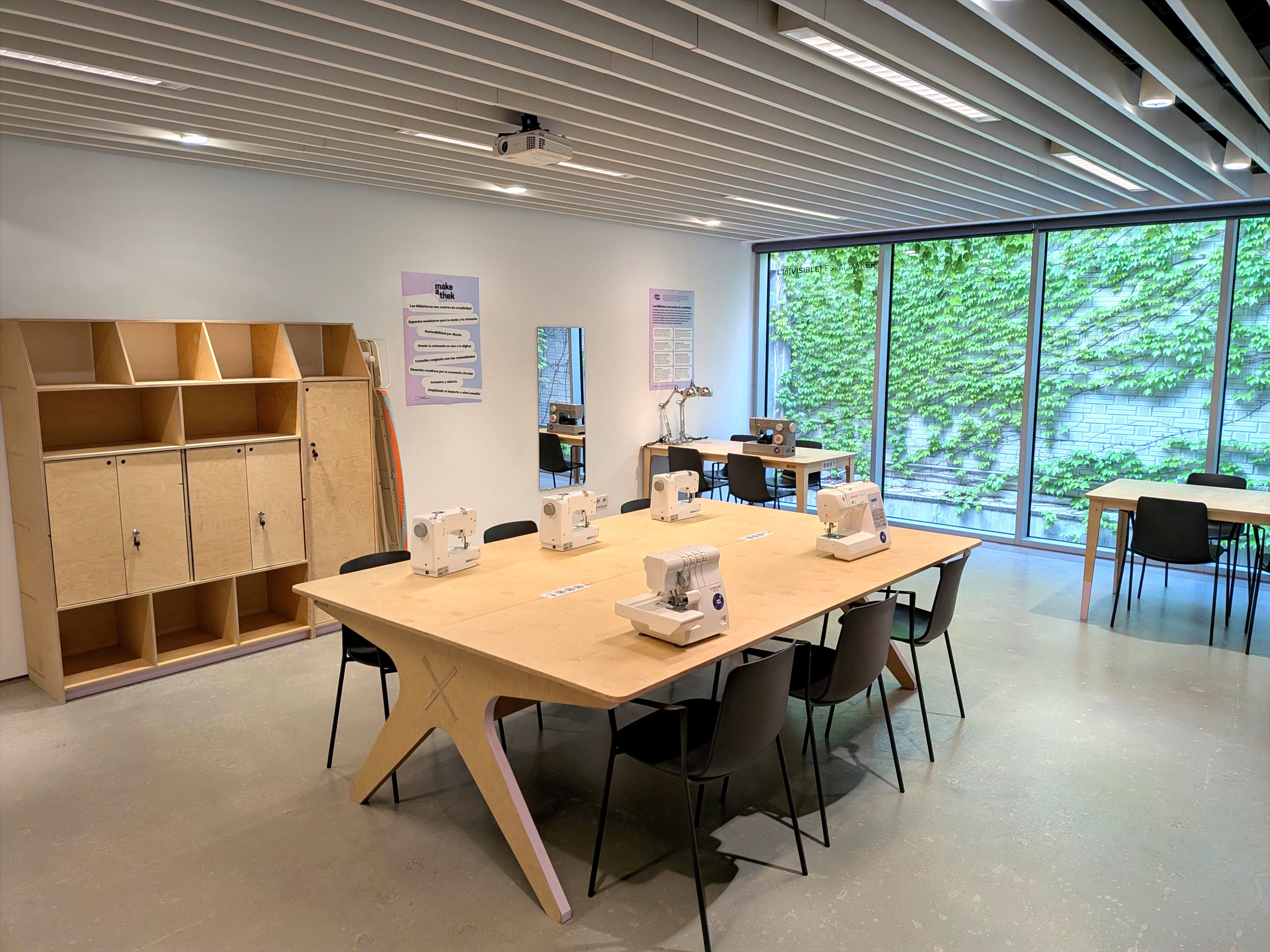
Physical Spaces concerns the conditions that make a creative space accessible, safe, flexible and recognisable. It supports libraries in planning, setting up and adapting permanent, temporary, pop-up or distributed spaces according to their activities, users and available resources.
Beginner
Start with an existing or temporary area, using simple and movable furniture. Define the purpose of the space, basic rules, accessibility needs, storage and safe circulation.
Intermediate
Develop a more recognisable and flexible set-up, with clearer activity zones, storage systems, accessible information and layouts that support both everyday use and workshops.
Advanced
Create a mature, accessible and adaptable environment, supported by long-term planning, efficient use of energy and space, durable furniture and well-integrated safety and management systems.
make-a-thek Space Planner
How to design a make-a-thek space using a physical and digital planning kit.
How to use this resource: Use this resource to imagine, test and compare different layouts for your make-a-thek space. You can use the physical or digital kit to place machines, furniture and activity areas, and discuss possible configurations with staff, users or partners.

Discover the hero resource

Set-up guidelines for Temporary Spaces
How to set up and manage flexible or pop-up makerspaces in your library.
How to use this resource: Use this resource when you want to activate a make-a-thek in a flexible, pop-up or temporary setting. It helps you plan what to bring, how to organise the space, how to support users and how to close or reset the space after use.
Set-up guidelines for Fixed Spaces
How to plan and organize a permanent, dedicated make-a-thek area.
How to use this resource: Use this resource when planning a permanent or semi-permanent make-a-thek area. It helps you think through layout, furniture, machines, storage, accessibility, workflows and everyday management before setting up the space.
How to use the spaces
Guidance on using your space responsibly, from selected machines and materials to shared rules and planned activities.
How to use this resource: Use this resource to explain how your make-a-thek space should be used in everyday practice. It can help staff and users understand shared responsibilities, available tools and materials, basic rules, safety needs and activity planning.
Wearable Wall Organizer
A step-by-step guide to sew a versatile tool organizer that can be worn, hung, and customized for your make-a-thek space.
How to use this resource: Use this resource to make a practical organiser for tools and small materials. Follow the step-by-step instructions, adapt the size and pockets to your needs, and use it as a wearable, wall-mounted or mobile support for activities.
Basic principles of accessible space
focus on article: Basic principles of accessible space How to ensure your makerspace is inclusive and accessible for a wide range of users.
How to use this resource: Use this resource to review your make-a-thek space from an accessibility perspective. It helps you identify barriers, improve layout and communication, and make tools, activities and information easier to use for a wider range of people.
Don't know what to download?
Not sure which resources to explore or download? We’re here to help. Take the questionnaire to assess your level, and we’ll recommend the most suitable activities for your needs.
Assess your level with questionnaire